
How to Make Soft Puttu with Wheat Puttu Podi: Simple Tips for Lump-Free Puttu
Tested by: Kales Agro Kitchen Team | Published: September 2026 | Last Updated: September 2026
Recipe testing note: This method was tested using coarsely ground, roasted wheat puttu podi and adjusted for moisture, resting time, and steaming duration to achieve a soft, crumbly texture.
There is nothing quite like starting your morning with a plate of steaming hot puttu and a side of spicy Kerala kadala curry or ripe yellow bananas. For generations, puttu has been a staple Kerala breakfast recipe. While white rice puttu is traditional, making puttu with wheat flour is a popular alternative to rice puttu and can be a wholesome source of dietary fiber, depending on the flour used.
However, many home cooks run into the exact same frustration: why does wheat puttu become hard, dry, or rubbery instead of soft and fluffy?
If your wheat puttu turns into dense, heavy blocks or forms stubborn, sticky lumps when you mix water into the flour, you are not alone. Learning how to make soft puttu with wheat puttu podi requires a slightly different approach than rice puttu.
Quick Recipe at a Glance
Item | Details |
Prep Time | 10-15 minutes |
Cook Time | 3-5 minutes |
Flour | 2 cups wheat puttu podi (coarsely ground) |
Water | ¾ cup lukewarm water (plus up to ¼ cup extra as needed) |
Coconut | 1 cup freshly scraped coconut |
Difficulty | Easy |
Target Texture | Soft, moist, and crumbly |
Why Does Wheat Puttu Become Hard?
Before diving into the solution, it helps to understand why wheat puttu becomes hard. Wheat flour absorbs and holds moisture differently from rice flour, so the water level needs more careful control.
The primary reasons your wheat puttu loses its softness include:
- Incorrect Water-to-Flour Ratio: Wheat coarse flour (podi) drinks up more water than rice flour. Adding too little water leaves the grains dry and chalky, while adding too much creates a sticky dough that steams into a dense brick.
- Over-kneading or Pressing the Flour: Puttu needs air gaps between the damp flour grains for steam to circulate. If you press or pack the flour tightly into the puttu kutti (traditional cylindrical puttu steamer), steam cannot pass through evenly, resulting in a hard, gummy outcome.
- Using Boiling Hot Water: Using boiling water can make the flour mixture overly sticky, so lukewarm water is easier to control when preparing wheat puttu.
- Over-Steaming: Leaving the puttu over steam for too long dries out the natural moisture, turning it rubbery as it cools down.
The Perfect Wheat Puttu Water Ratio & Fist Test
The single most important step in any wheat puttu recipe is getting the moisture level right.
The Golden Rule: For every 2 cups of roasted wheat puttu podi, you typically need ¾ cup to 1 cup of lukewarm water, added gradually in small sprinkles. Lukewarm water helps the flour absorb moisture evenly without making the mixture excessively wet.
How to Test for Perfect Moisture (The Fist Test)
Forget strict measurements for a second, your hands are your best guide:
- Take a small handful of the mixed wheat flour and squeeze it gently in your palm.
- If it holds together as a soft shape without falling apart, but crumbles easily when you press it lightly with your thumb, your moisture level is perfect.
- If it turns into a wet dough ball, you added too much water (mix in a bit of dry roasted flour to fix it).
- If it immediately crumbles back into dry dust, sprinkle a little more lukewarm water.
Looking for quality ingredients for your next batch of puttu?
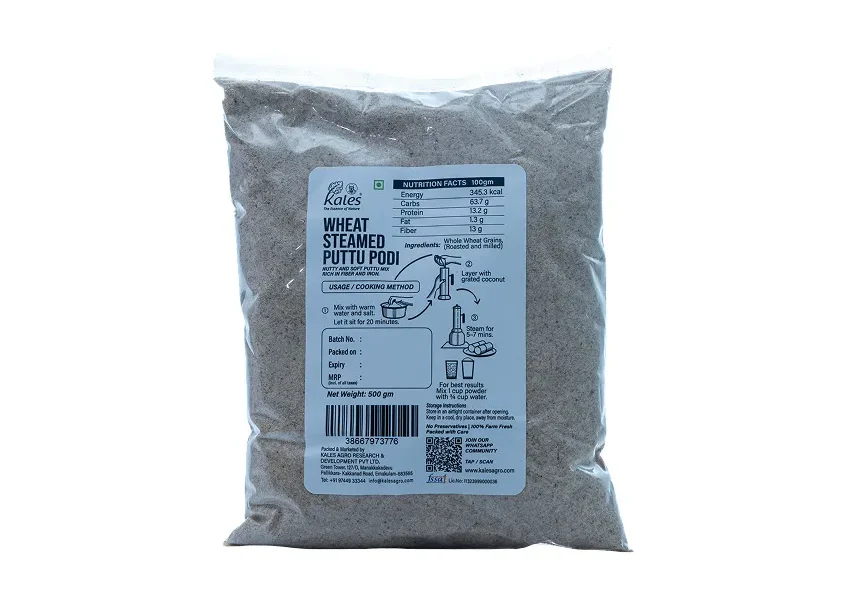
Explore Kales Agro’s steamed Puttu powders
4 Simple Tips for Soft and Fluffy Puttu
If you want to master how to make soft wheat puttu, incorporate these practical kitchen tips into your daily routine:
- Optional Pulse-Blend Method: If mixing by hand leaves stubborn flour clumps, sprinkle water and salt over your flour and mix roughly with your fingers. Pulse briefly once or twice in a blender jar to help break up clumps and create an evenly moist texture.
- Rest the Damp Flour: Never rush the flour directly into the steamer. After moistening the wheat puttu podi, cover the bowl and let it rest for 10 to 15 minutes. This allows the coarse wheat granules enough time to hydrate thoroughly.
- Layer Softly, Do Not Pack! When filling your puttu kutti or coconut shell steamer (chiraetta puttu maker), alternate layers of fresh grated coconut and moistened wheat flour should be added. Drop the flour lightly using a spoon. Never push down or compress the layers.
- Watch the Steam Closely: Keep the heat on medium-high. Once you see a steady plume of steam escaping from the top holes of the steamer tube, cook for just 3 to 5 minutes, then remove it from the flame.
Quick Troubleshooting Guide
- If puttu is hard: Add slightly more lukewarm water next time, let the flour rest for 15 minutes, and avoid over-steaming.
- If puttu is sticky or gummy: Reduce the water amount, ensure your wheat puttu podi is well-roasted, and layer gently without pressing.
- If puttu has dense lumps: Sprinkle water gradually while tossing with your fingertips, or use a coarse sieve to break up clumps before steaming.
- If puttu crumbles completely: The flour is too dry; sprinkle a tablespoon of water, mix gently, and re-test with the Fist Test.
Simple Kerala-Style Wheat Puttu Recipe
Follow this step-by-step wheat puttu preparation guide for a reliable breakfast every time:
Ingredients Required
- Wheat Puttu Podi: 2 cups (coarsely ground and well-roasted)
- Lukewarm Water: ¾ cup (keep up to ¼ cup extra available if needed)
- Salt: ½ teaspoon (dissolved in the water)
- Grated Coconut: 1 cup (freshly scraped)
Step-by-Step Instructions
- Prepare the Water Solution: Dissolve ½ teaspoon of salt into ¾ cup of lukewarm water.
- Moisten the Flour: Place 2 cups of wheat puttu podi in a wide mixing bowl. Slowly sprinkle the salted water a few tablespoons at a time, tossing gently with your fingertips in a circular motion to avoid forming dough balls. Add small amounts from the extra ¼ cup of water only if the mixture remains too dry.
- Rest the Mixture: Cover the bowl with a lid or damp cloth for 10-15 minutes to allow proper hydration.
- Fill the Puttu Kutti: Add 2 tablespoons of freshly grated coconut at the bottom plate of the steamer tube. Add 4-5 spoons of the prepared wheat mixture loosely. Repeat with another layer of coconut and flour until full. Top off with coconut.
- Steam to Perfection: Place the puttu tube over a steaming pot or pressure cooker nozzle designed for puttu steaming. Steam on medium heat until the steam vent releases continuous white steam (approx. 3-5 minutes).
- Serve Hot: Gently push out the puttu onto a serving plate using a wooden skewer. Pair with kadala curry, banana, or a drizzle of pure organic honey.
Cooking Tip: A small amount of warm milk or a pinch of ghee can be tested in your water mixture if you prefer a slightly richer, softer texture that stays moist longer.
Frequently Asked Questions (FAQ)
Why is my wheat puttu sticky and gummy?
Wheat puttu usually becomes sticky when too much water is added, the flour is packed tightly into the steamer, or the flour is not properly roasted. Always sprinkle water in small increments and layer the flour loosely without pressing.
Can I make soft puttu with regular whole wheat atta?
Standard chapati flour (atta) is ground too fine and tends to turn dense or gummy when steamed. For authentic texture, it is best to use coarsely ground wheat puttu podi. If using regular atta, dry-roast it on low heat for 8-10 minutes before moistening to reduce stickiness.
How do I keep wheat puttu soft after it cools down?
To keep wheat puttu soft for lunchboxes, ensure the flour rests for 15 minutes before steaming so it holds moisture properly. Avoid over-steaming, and store the warm puttu in an insulated casserole immediately after removing it from the steamer.
Perfect Your Breakfast with Authentic Ingredients
The texture of wheat puttu depends heavily on the quality, roasting, and grind of the puttu podi. Choosing properly processed ingredients makes everyday preparation easier and far more consistent.
Want to make your morning routine effortless with wholesome ingredients? Kales helps bring authentic flavor to your table with farm-direct staples, pure sweet items, and essential kitchen ingredients.